Digital Trust in Hiring: Securing Recruitment With Decentralised Identity Verification
Advanced AI technologies have introduced sophisticated identity fraud tactics in recruitment. Decentralised identity verification offers a secure, consent-driven approach to combat hiring fraud.

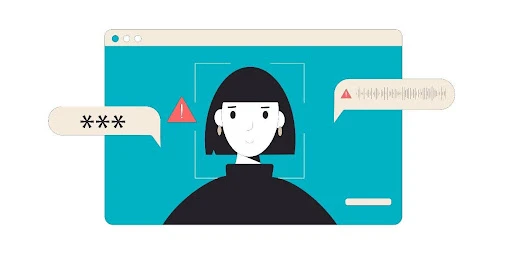
As Artificial Intelligence (AI) continues to evolve, it brings both remarkable opportunities and significant challenges to recruitment. Advanced AI technologies have introduced sophisticated identity fraud tactics, including AI-generated impersonations and deepfake profiles, which add complexity to hiring processes. Candidates can now leverage these tools to fabricate identities, falsify skills, and even generate real-time customised responses during interviews, making deception increasingly difficult to detect.
Emerging AI Technologies Present New Challenges in Recruitment
Technological changes and advancements in AI also pose new challenges for HR, requiring professionals to quickly adapt to evolving threats and fraud approaches. Recent reports indicate that some candidates are using stolen identities and AI-driven tools to impersonate others during recruitment.
Generative AI enables candidates to fabricate identities and demonstrate false skills throughout the recruitment process. AI-powered interview solutions can generate customised responses in real-time, featuring speech recognition and instant translation. They are almost unnoticeable to interviewers, complicating remote recruitments.
Identity Fraud in Recruitment: Real and Growing Impacts
The scale of recruitment fraud attempts is striking. Both large corporations and small businesses have been affected, experiencing challenges from data breaches to compromised intellectual property and financial fraud. Some fraudsters use their access to implant backdoors, creating long-term vulnerabilities within companies.
Background Check Services: Essential but Evolving
Background screening is a critical part of the hiring process, with most organisations relying on providers to verify potential hires. These checks cover identity verification, employment history, academic credentials, and more.
However, the introduction of AI-fueled deception tactics is outpacing some traditional screening practices. The growing sophistication of fraud means that even robust checks must continually adapt.
Challenges in Traditional Background Screening
The current background check landscape has evolved to comply with data privacy regulations like GDPR, DPDPA, and CCPA, adding complexity to information-sharing. These laws protect employee data but can also limit data-sharing capabilities, occasionally resulting in gaps in verification.
Meeting the Challenge with Technology
Traditional background screening has long been essential to safeguarding hiring processes. However, the rise of AI-enabled deception emphasises the need to build on these methods with innovative solutions. Multi-factor identity verification, biometric checks, and continuous monitoring are examples of how recruitment processes can be enhanced.
Strengthening Identity Verification to Address Fraud Risks
Identity verification is the process of confirming that identity credentials correspond to a natural person and that the details match the person claiming them. Digital identity verification works by capturing information from documents and matching photos to ensure the person presenting the document is its rightful owner.

Benefits of Digital Identity Verification
- Increased Trust and Reduced Fraud: Digital identity verification reduces human error in verifying details.
- Improved Efficiency and Convenience: Automation enables instant verification with enhanced accuracy.
- Cost-effective: Compared to manual verification, digital identity verification lowers costs significantly.
Identity Verification with Decentralised Technology
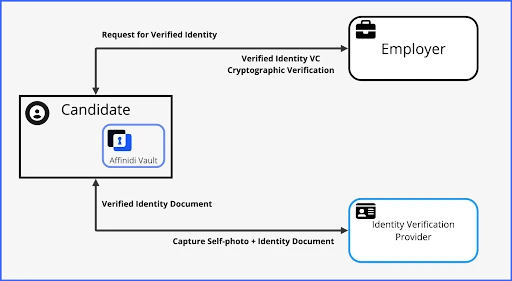
Affinidi’s Employment Verification solution revolutionises how businesses interact with users with a secure and consent-driven approach. Employers can securely validate a candidate’s identity documents through decentralised protocols. These verified identities use the W3C compliant Verifiable Credential (VC) format, making them tamper-evident and reusable across platforms.
Candidates securely store their Verifiable Credentials in a personal data store (the Affinidi Vault) and share it securely with consent when an employer requests verification.
The Benefits
- Reusability and Convenience: Candidates can verify their identity once and securely reuse it across multiple platforms.
- Security and Authenticity: Verifiable Credentials are tamper-evident and cryptographically verified, reducing the risk of identity fraud.
- Speed and Reliability: The verification process is faster and more reliable, reducing hiring time and risk.
We invite you to join us in our mission to establish end-to-end trust in data and champion a new era of digital trust.